When to use this page?
🔹 When you need guidance on the next step with what to do with prospect or client
🔹 Guidance on how to act, think or make decisions
🔹 Preparing for meetings or calls to ensure consistent process
🔹 Reviewing deals to identify the best next steps and actions
💬Selling is not about luck. It is a process - asking the right questions, listening carefully, and building trust.
Sales Pipeline Framework
Our framework takes you from prospecting to retaining clients, guiding every step of the sales journey. By following these six steps, you can manage opportunities more effectively, stay organized and increase your chances of closing deals while building long-term relationships. This framework ensures a consistent, repeatable process that keeps the team aligned and the pipeline healthy.
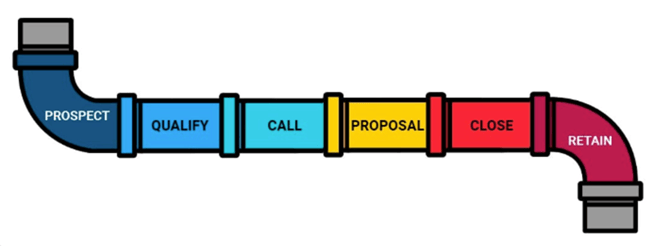
1. Figure - Sales Pipeline
STEP 1 - Prospect
🔹Research the company - website, annual reports, LinkedIn, recent news
🔹Understand context - local or regional? How many countries do they manage HR and payroll in?
🔹Identify key people - HR Director, CFO, IT Manager? Each has different priorities
💡Formulate your view and share it with the team. Every opinion matters
STEP 2 - Qualify
🔹Prepare questions for the client - focus on facts, not feelings - logic and structure matter
🔹Define your goal - move to a demo, pilot or decision meeting?
🔹Check CRM notes - review past communications, meetings, or challenges to build credibility
💡Create the prospect and key contacts in HubSpot, and ensure Outlook is connect to the HubSpot Sales plugin.
STEP 3 - Call
Before the meeting
🔹Set the context - explain the meeting's purpose clearly
🔹Agree on the agenda - keep it short and structured
🔹Warm-up - have a short phone conversation or email about the client and schedule the meeting
During
🔹Focus on gathered information - value, risk and costs
🔹Read the room - adjust your pace and tone depending on how people in the meeting are feeling
🔹Listen actively - confirm understanding
🔹Take notes - key insights often come between the lines
End and after the meeting
🔹Agree on the next step - demo, follow-up, technical call or pilot
🔹Say thank you - politely and calmly
🔹Send summary within 24 hours
💡Handling Objections
🔹Stay calm - defensive reactions kill trust
🔹See objections as opportunities - acknowledge concerns and respond
🔹Answer with facts - use certificates, examples or data
STEP 4 - Proposal
🔹Confirm requirements – ensure scope, countries, employees, and timelines are clear
🔹Align internally – sales, product, delivery, and finance are on the same page
🔹Tailor the proposal – reflect the clients priorities, risks, and success criteria
🔹Be transparent – pricing, assumptions, limitations, and responsibilities
💡The proposal is not just a price document. It is your written understanding of the client’s problem and how you solve it.
After sending the proposal
🔹Walk through it together – do not send and wait in silence
🔹Invite questions – clarify early to avoid friction later
🔹Confirm decision process – who decides, when, and how
STEP 5 - Close
🔹Address final objections – focus on value, not discounts
🔹Agree on pricing, contract terms, and start date
🔹Remind the client why now is the right time
💡Closing is about confidence and clarity, not pressure. If you have done the earlier steps well, this should feel natural.
After signing
🔹Thank the client – acknowledge trust and partnership
🔹Confirm next steps – onboarding, kickoff, and responsibilities
🔹Update CRM – mark deal as closed and document learnings
STEP 6 - Retain
🔹Ensure strong handover – sales to implementation and support team
🔹Set expectations early – timelines, milestones, and communication rhythm
🔹Stay involved – do not disappear after the contract is signed
🔹Monitor value delivery – are we solving the problems we promised to solve?
💡Retention starts before the deal is closed. Long-term success comes from trust, consistency, and delivered value.
Ongoing
🔹Check in regularly – business reviews, feedback, and health checks
🔹Identify growth opportunities – new countries, modules, or use cases
🔹Build partnership – happy clients become advocates